

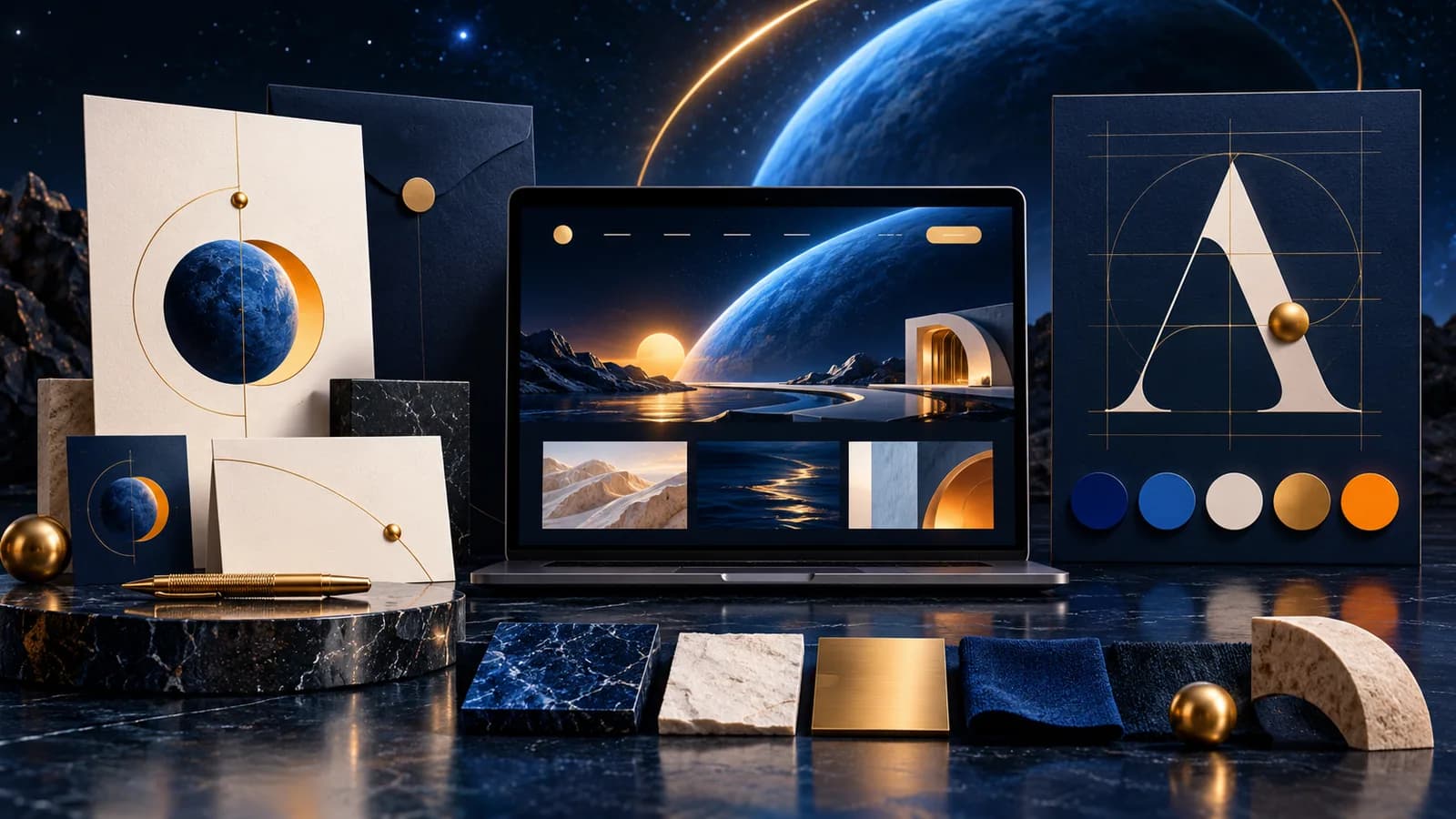
A corporate design (CD) is the consistent visual appearance of a business: its logo, colours, typography, imagery and layouts all follow fixed rules, so your website, flyers, business cards and social profiles look like one company at a glance.
A quick picture: the logo is the name badge, the corporate design is the full uniform. Each piece might be fine on its own, but it only looks professional when it is always combined the same way. Below we explain what a CD is made of, how it differs from corporate identity, and why consistency builds trust, including a short checklist to get started.
What exactly is a corporate design?
A corporate design is the collection of visual building blocks a brand is made of:
- Logo: the wordmark, the symbol or both, plus the rules for how it is used (size, clear space, background).
- Colours: a small, defined palette that reappears everywhere.
- Typography: the typefaces used for headlines and body text.
- Imagery: photography, illustration or graphics in a consistent style, for example with the same colour mood.
- Layouts: how content is structured on your website, flyers, presentations and social media posts.
Together they form a promise of recognition: whether you see a flyer, a price sign or a website, you instantly know who it belongs to.
How does a corporate design differ from corporate identity and a logo?
These terms get mixed up all the time. Here is the short, clear version:
| Term | What it means |
|---|---|
| Logo | A single graphic element, the smallest building block. |
| Corporate identity (CI) | The whole brand: values, tone of voice, messages and behaviour, including everything you cannot see. |
| Corporate design (CD) | The visible part of the CI: all visual rules, logo, colours, typography, imagery, layouts. |
So the logo is part of the CD, and the CD is the visible part of the corporate identity. Commissioning just a logo gives you one block, not a consistent brand yet.
Why does consistency build trust?
People notice patterns faster than they realise it. When they see your logo, colours and typography again and again, they quietly form the expectation that everything with you is "in order", like a tradesperson whose van, business cards and website look exactly alike.
In practice, that has real effects:
- Credibility: a consistent look suggests someone cared about the details, which signals care in other areas too.
- Recognition: what repeats, gets remembered. A consistent look is easier to attribute to you.
- Speed: once the rules exist, your team can produce flyers, posts or presentations without reinventing the wheel every time.
Without consistency, different colours here, different typefaces there, the opposite happens: the business looks indecisive.
What does a good brand guideline look like?
A brand guideline (also called brand guidelines or a corporate design manual) is the instruction manual for your own CD. It does not have to be an 80-page document for most small and mid-sized businesses, a compact guide with the essential rules is enough:
- Logo: correct versions, minimum size, clear space, backgrounds
- Colours: exact values (CMYK, RGB, HEX) and their hierarchy
- Typography: defined typefaces for headlines and body text
- Imagery: style, colour mood and sources for photos or graphics
- Layouts: templates for website, flyer, business card and social media posts
- Do's and don'ts: the common mistakes to avoid
Conclusion: a CD is a decision that pays off every day
A corporate design is not a decorative extra but a clear, visible decision about your brand: define it once, and it works in every flyer, website and post. For small and mid-sized businesses it is one of the most effective ways to look professional and trustworthy without a big budget.
If you would like to know how such a system is built for your business, from the logo to the guideline, talk to us about branding or graphic design, or get started via our onboarding process. For a sense of what it costs, take a look at our article on logo and brand identity costs. We are based in Dresden and work with clients across Germany, Europe and worldwide.